

In March 2026, Clari + Salesloft announced the gradual sunset of Drift and named 1mind as its exclusive successor. The announcement did not provide one final shutdown date for every customer. Existing Drift users need to confirm their own access, renewal, and migration dates with their account team.
Drift pricing at a glance: Drift is no longer a conventional new purchase. Before the sunset, Premium was widely listed at about $2,500 per month on an annual contract, while Advanced and Enterprise were quote-based. If you already use Drift, treat your signed order form and current account notice as the source of truth. If you are evaluating it for the first time, compare current alternatives instead.
This guide is for existing Drift customers, B2B marketing and sales teams, and businesses comparing conversational AI chatbot options for lead generation, sales qualification, and customer support automation. It breaks down Drift’s historical pricing, the sunset timeline, migration planning, alternative platforms, pricing comparisons, and the criteria to use when choosing a replacement—so current users can plan transition costs and new buyers can avoid investing in a discontinued product.
What is Drift?
Drift helped establish the conversational marketing category. Its software put chatbots and live sales conversations on company websites so businesses could engage visitors without sending everyone through a form.
Marketing and sales teams used Drift to:
- Answer questions from website visitors
- Qualify leads through automated playbooks
- Route high-intent buyers to a salesperson
- Schedule meetings
- Personalize website conversations using account and CRM data
- Notify sales representatives when target accounts showed activity
- Connect conversations to systems such as Salesforce, HubSpot, and Salesloft
Drift was primarily a B2B revenue product. Its strongest use case was not handling a large customer-support queue as cheaply as possible. It was identifying valuable website visitors and moving them into sales conversations faster.
That positioning explains the price. Drift was sold against pipeline and deal value rather than the cost of a simple chat widget.
Is Drift shutting down?
Yes, but “gradual sunset” is more accurate than saying every Drift account has already shut down.
On March 6, 2026, Clari + Salesloft announced that it was moving away from the Drift conversational marketing product and prioritizing 1mind’s AI sales capabilities. The company called the move a gradual sunset and said existing Drift clients would be referred to 1mind under an exclusive agreement. The official partnership announcement did not specify one global end-of-life date.
 Salesloft’s current Chat Agents page is more direct: “We’ve transitioned from Drift to 1mind.” It describes 1mind as the source of buyer signals feeding the Salesloft Predictive Revenue System.
The practical interpretation is:
- Drift is not a sensible platform for a new buyer to adopt in 2026.
- Existing customers may retain access during a contract-specific transition period.
- The date that matters is the date in your customer communication, renewal paperwork, or migration agreement.
- 1mind is the vendor-endorsed successor, but customers are not required to treat it as their only product evaluation.
Do not plan around an end date copied from an alternative vendor’s blog. Ask Clari + Salesloft to confirm your dates in writing.
The Drift sunset timeline
The sunset was not one isolated announcement. It followed two ownership changes and a significant integration incident.
February 2024: Salesloft acquires Drift
Salesloft announced its acquisition of Drift on February 13, 2024. At that time, Salesloft said Drift customers would see no immediate impact on the product or price and would continue receiving support through the same channels. The original acquisition announcement framed the deal as a way to connect website engagement with revenue workflows.
August and September 2025: the Salesforce integration is disabled
In August 2025, attackers used compromised OAuth tokens associated with the Salesloft Drift application to access data in customer Salesforce environments. Salesforce disabled the Drift connection.
By September 7, Salesforce had re-enabled other Salesloft integrations but said the Drift app would remain disabled until further notice. Its security response advised customers to review connected apps, rotate tokens, and audit access logs.
This incident belongs in the timeline because it affected a central Drift integration. It should not be presented as the confirmed cause of the sunset. Clari + Salesloft’s March 2026 announcement did not make that claim.
December 2025: Clari and Salesloft complete their merger
Clari and Salesloft completed their merger on December 3, 2025. The combined company shifted its strategy toward a Predictive Revenue System that connects revenue data, forecasting, seller workflows, and AI agents.
March 2026: Drift’s gradual sunset is announced
Clari + Salesloft announced a partnership with 1mind and said it would gradually sunset Drift. Existing Drift clients would be referred to 1mind as the exclusive successor.
The announcement positioned the move as a transition from conversational marketing software to broader, multimodal AI sales agents. 1mind’s agents are designed to operate on websites, inside products, in deal rooms, and during calls.
What happens after the announcement?
There is no public timeline that applies cleanly to every Drift customer. Contract dates, negotiated terms, data volumes, and integrations differ. Some teams may have a short migration window. Others may retain access through the end of a longer agreement.
The uncertainty is a reason to start planning, not a reason to guess.
How much did Drift cost?
Drift did not maintain consistently transparent public pricing. Buyers generally went through a sales process, and quotes changed with the plan, contract term, user count, features, and implementation scope.
Near the sunset, the commonly reported structure of drift pricing plans looked like this:
|
Drift plan |
Reported starting price |
Typical positioning |
Status in 2026 |
|---|---|---|---|
|
Premium |
About $2,500/month, commonly $30,000/year |
Core conversational marketing, chatbots, live chat, meetings, and notifications |
Historical; Drift is being sunset |
|
Advanced |
Custom quote |
Advanced routing, audiences, testing, Fastlane, and more sophisticated automation |
Historical; no public list price |
|
Enterprise |
Custom quote |
Larger deployments, governance, personalization, workspaces, security, and dedicated support |
Historical; no public list price |
The $2,500 figure is supported by archived marketplace and review data, including G2’s Drift pricing profile. It should still be described as an approximate historical starting price. A customer’s actual order form could be lower or considerably higher, and Enterprise quotes could exceed $60,000 per year, though actual contracts still varied.
Drift Premium pricing
Premium was the entry point most buyers encountered after Drift moved upmarket, and among Drift pricing plans, selection typically depended on required features rather than the lowest starting price. Public plan descriptions commonly associated it with:
- Custom chatbots and live chat
- Meeting scheduling
- Conversational landing pages
- Real-time notifications
- Lead qualification playbooks
- CRM and marketing integrations, depending on the contract
At approximately $30,000 per year, Premium only made economic sense when website conversations could influence meaningful pipeline. A business selling $50 products would need a very different conversion volume from a B2B company selling six-figure contracts.
Drift Advanced pricing
Advanced did not have a dependable public list price. It was designed for teams needing more control over targeting, routing, experimentation, and automated qualification, especially for mid market teams moving into higher tiers for more scale and advanced features.
Historical descriptions often included features such as Fastlane, flex routing, audience segmentation, A/B testing, and AI-powered chatbots. Fastlane also let qualified visitors book meetings instantly. The actual bundle could vary by quote and contract date.
Any article that assigns Advanced one exact 2026 price is presenting an estimate as a price list. There is no current public Drift checkout page against which to verify it.
Drift Enterprise pricing
Enterprise was also quote-based. It served larger companies needing multiple teams or workspaces, stronger administration, security controls, custom integrations, service commitments, and dedicated account support.
Public estimates for enterprise contracts vary widely. That variation is credible because the deployments were different. It does not produce a reliable universal price.
If you are reviewing an old Drift business case, use the executed contract rather than an online estimate. The plan name alone does not reveal the user allowance, integration package, service level, or implementation work that was purchased.
Did Drift have a free plan or free trial?
Drift offered free chat products earlier in its history. By its later enterprise-focused period, the pricing information buyers most often encountered started with Premium at approximately $2,500 per month. Some software marketplaces continued to list a trial, but availability depended on the sales process.
The distinction no longer matters for a new evaluation. A free Drift account is not a durable way to avoid the sunset. Test a current product that has a published roadmap and migration path.
The real Drift cost beyond the base plan
The $30,000 annual starting point did not capture the real cost. The base license was only the entry point, while hidden costs tied to configuration, integrations, and fast human follow-up pushed the total cost much higher. In some cases, annual costs could exceed $200,000 once software, staffing, implementation, and maintenance were included.
Additional user seats
Drift plans included a negotiated number of users, and public buyer guides and reviews have frequently reported additional seats around $80 per user per month for access, so this part of the budget rose with team size, with some quotes higher.
Treat that figure as a budgeting assumption, not an official 2026 rate. The useful question for an existing customer is how many people actually need full access. Giving every account executive a seat can add thousands of dollars per year without improving the website experience.
Implementation and onboarding
Drift required more work than installing a generic widget. Its implementation typically took 4–8 weeks. A serious rollout could involve:
- Defining target audiences and qualification rules
- Writing and testing playbooks
- Connecting calendars, crm integration, and routing logic
- Training sales representatives and administrators
- Establishing reporting and attribution
- Reviewing privacy, consent, and data-retention settings
Implementation costs for Drift often ranged from $1,000 to $15,000, depending on scope and whether internal or partner services were used.
There was no reliable universal implementation price. Some companies used Drift or a partner for services. Others absorbed the work internally. Either way, the labor belonged in the first-year budget.
CRM, calendar, and marketing tools
Drift did not replace the systems around it. A company might still pay for Salesforce or HubSpot, a marketing automation platform, enrichment data, scheduling infrastructure, and Salesloft workflows.
An integration can be included technically while still creating operating cost. Someone must maintain field mappings, permissions, routing ownership, and failure alerts. Even with the integration connected, crm sync issues can still misroute leads or break ownership rules.
Live coverage
Drift could qualify and route visitors automatically, but much of its promise depended on real-time conversations while the buyer was still on the site. That requires coverage.
The salary of an SDR is not a Drift fee. It is still part of the economic model. If a company pays for real-time routing but rarely has someone available, it is funding a premium workflow without staffing the moment that creates value.
For reliable coverage, sdr staffing can add roughly $150K to $300K per year depending on hours and geography, and most teams still rely on that headcount to make the workflow work.
Ongoing optimization
Playbooks age. Product pages change, sales territories move, qualification criteria evolve, and calendars fill up. A Drift deployment needed an owner who could review conversation data, fix routing problems, and update the experience. Ongoing management typically required 5-10 hours monthly for updates, routing fixes, and reporting checks, so the tool still needed active ownership.
Without that work, the chatbot could become an expensive form that happened to speak one question at a time.
Exit and migration work
The sunset adds a cost that was not part of the original purchase: leaving.
Teams now have to inventory bot content, recreate routing, move knowledge, reconnect systems, validate analytics, and train users on a replacement. Migration may also require security review, procurement, legal approval, and a period when two systems run at once.
Drift cost examples
These examples are illustrations, not Drift quotes. They show how small assumptions change the real total.
|
Scenario |
Historical license assumption |
Other assumptions |
Illustrative first-year cost |
|---|---|---|---|
|
Premium base only |
$30,000/year |
No added services or users |
$30,000 |
|
Premium plus 5 extra users |
$30,000/year |
5 × $80 × 12 |
$34,800 |
|
Premium rollout for a growing team |
$30,000/year |
10 extra users at $80/month plus $7,500 implementation budget |
$47,100 |
|
Advanced or Enterprise |
Custom |
Custom seats, services, integrations, and support |
Contract-specific |
The third example still excludes salaries, CRM subscriptions, data providers, and migration work. A company can therefore have a $47,100 software-and-services budget attached to a much larger operating commitment.
The right historical ROI question was not “How much does the widget cost?” It was “How much qualified pipeline did this system create that would not have existed otherwise?”
Why is Drift being sunset?
The official explanation is strategic. Clari + Salesloft said it was transitioning from Drift’s conversational marketing product to prioritize 1mind’s more advanced AI sales capabilities.
Drift centered on website chat, qualification, routing, and human sales handoff. The partnership describes 1mind as a broader AI teammate that can engage buyers across websites, products, deal rooms, and live calls. Its signals then feed Clari + Salesloft’s revenue workflows and forecasting system.
That is the explanation supported by the announcement.
Ownership consolidation and the 2025 security incident are relevant history, but readers should be cautious about turning chronology into causation. Clari + Salesloft did not publicly say that the incident forced the sunset, nor did it publish a detailed financial rationale.
What should existing Drift customers do now?
Do not begin by choosing a vendor. Begin by documenting what Drift currently does.
1. Get the transition dates in writing
Ask your account team to confirm:
- The last date of full production access
- The renewal or non-renewal date
- Whether support changes before access ends
- Data export availability and deadlines
- Which integrations will remain operational during transition
- Any migration assistance, credits, or contractual options
“Gradual sunset” is a corporate roadmap description. Your company needs calendar dates.
2. Inventory the working deployment
List every active chatbot, playbook, audience, routing rule, calendar, form, integration, notification, and report. Include page targeting and fallback behavior.
Then mark each item as:
- Essential to recreate
- Useful but replaceable with a simpler process
- Unused or safe to retire
This prevents the team from paying to rebuild years of accumulated configuration that no longer produces value.
3. Separate use cases from features
“We use Fastlane” is a feature statement. “Qualified pricing-page visitors need a direct path to the right account executive” is a requirement. The real question is whether a replacement can turn buyer intent into pipeline, not whether it copies every Drift feature.
Write requirements in the second form. It allows the team to compare products that solve the same job differently. The difference between vendors often shows up in qualification, routing, and meeting booking rather than in feature labels alone.
4. Preserve the data you need
Export the conversation history, lead data, bot copy, performance reports, and configuration records your account permits you to retain. Confirm retention requirements with legal and security teams before moving customer data.
Do not wait until the last week. Exports need to be checked for completeness and may require transformation before another platform can use them.
5. Review connected apps and credentials
Map every API key, OAuth connection, webhook, CRM user, calendar, and data destination associated with Drift. After the replacement is live, revoke credentials that are no longer needed.
This is good migration hygiene for any SaaS platform. It is especially important when the old system had broad access to CRM and marketing data.
6. Run the replacement in parallel
If the contract and website setup allow it, test the replacement on a limited set of pages or traffic before removing Drift. Validate:
- Answer quality
- Lead capture
- Routing and assignment
- Human handoff
- CRM records
- Analytics and consent behavior
- conversion rates
Compare results against Drift’s recent baseline, and check handoff speed because slower follow-up can reduce conversion rates. A successful installation is not the same as a successful migration.
7. Remove Drift cleanly
Once the replacement is stable, remove the widget and scripts, disable unused integrations, revoke credentials, close unnecessary user accounts, and update privacy documentation. Confirm that old chat triggers no longer appear on cached or regional versions of the website.
Drift alternatives to consider in 2026
The best Drift alternative depends on which part of Drift mattered. A team that used it as an enterprise B2B routing layer needs something different from a company that mainly answered website questions and captured leads. Several tools compete on affordability, and readers looking for the cheapest Drift alternative should compare total fit rather than only entry price.
|
Alternative |
Best fit |
Pricing approach |
Main tradeoff |
|---|---|---|---|
|
Website AI, lead capture, sales and service conversations, ecommerce, and human handoff |
From $19/user/month annually or $25 monthly |
Not a one-for-one replacement for Drift’s enterprise ABM and Salesforce routing stack |
|
|
1mind |
Enterprise teams wanting the vendor-endorsed Drift successor and Clari + Salesloft alignment |
Custom quote |
A broader AI sales-agent model rather than a simple Drift clone |
|
Qualified |
Salesforce-centered B2B teams focused on inbound pipeline and AI SDR workflows |
Custom quote |
Enterprise buying process and strong Salesforce orientation |
|
Intercom |
SaaS companies with support-led messaging and AI resolution needs |
Seat price plus usage, including $0.99 per Fin outcome |
Costs combine seats, outcomes, and optional messaging products |
|
HubSpot chatbot builder |
Teams already using HubSpot CRM or needing a low-cost starting point |
Free tools available; advanced capabilities require paid HubSpot products |
Best value depends on adopting more of the HubSpot ecosystem |
Knock AI starts at $1,000 per month, Tidio offers free or low-cost plans for SMBs, and Featurebase offers transparent pricing with a free plan.
ChatBot.com: best when the website conversation is the priority
ChatBot is the most relevant choice for teams that used Drift to answer product questions, qualify visitors, capture contact details, and pass conversations to people.
Its AI Agent can learn from website content, documentation, FAQs, and product information. The platform combines automated conversations with live chat, a shared Inbox, ticketing, workflows, business channels, and Shopify selling tools. See the full ChatBot feature set.
The pricing model is much easier to test. Essential costs $19 per user per month when billed annually or $25 with monthly billing. Growth costs $79 annually or $99 monthly. Plans include AI resolutions, and every plan has a 14-day trial without a credit card. See the current ChatBot pricing.
ChatBot is not the closest fit for a company that needs advanced account-based orchestration across a large Salesforce revenue organization. It is a strong fit when the actual requirement is to make the website helpful, capture buying intent, automate repetitive conversations, and preserve human handoff without a $30,000 historical entry point.
1mind: the official successor
1mind is the default product to evaluate if alignment with Clari + Salesloft is essential. It was named the exclusive successor and is designed for more autonomous, multimodal sales work, including qualification, product demonstrations, and engagement beyond a text widget.
That does not make it an automatic renewal decision. Ask for a product mapping, migration scope, price, data terms, and proof that it covers the Drift workflows your team actually uses.
Qualified: for Salesforce-native pipeline teams
Qualified focuses on website pipeline generation for Salesforce-oriented B2B companies. Its current pricing page uses customized plans rather than a public price list. It is worth evaluating when account segmentation, meeting routing, Salesforce reporting, and enterprise inbound-sales workflows are central requirements.
Intercom: for support-led SaaS teams
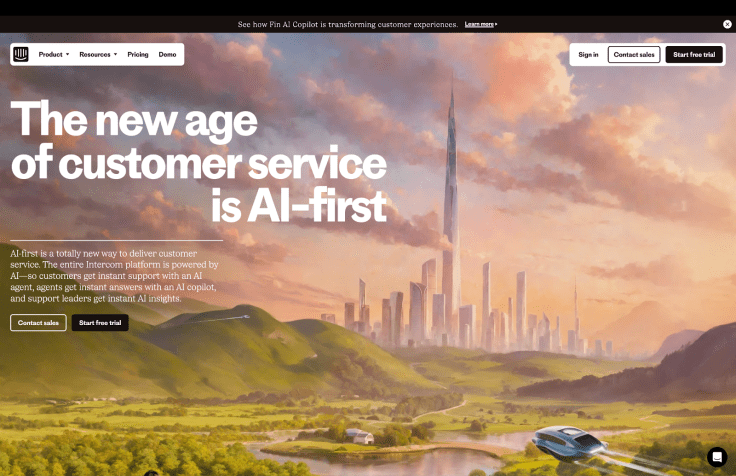
Intercom is a better comparison when customer service, in-product messaging, and the needs of support teams matter as much as lead qualification. Its AI Agent is priced from $0.99 per outcome, with separate seat pricing and optional usage charges. The current Intercom pricing makes it possible to model outcomes, but the total still depends on the number of teammates and channels.
For a broader comparison, see these Intercom alternatives.
HubSpot: for teams already using its CRM
HubSpot provides a free chatbot builder that can qualify leads, book meetings, answer common questions, and write information to HubSpot CRM. It is a practical starting point for smaller teams already committed to HubSpot.
Advanced automation, reporting, AI, and service workflows may require paid HubSpot products. Evaluate the cost of the whole HubSpot setup rather than treating the free widget as the final architecture.
How to choose a Drift replacement
Use a short requirements scorecard instead of comparing the longest feature lists.
Website experience
Can the replacement answer questions accurately, understand the current page, capture details without excessive friction, and work well on mobile? Some buyers also prefer one platform for AI chat, live handoff, and help resources instead of stitching products together, so test it with real product and pricing questions.
Sales qualification and routing
Check whether the platform can collect the information your team uses to qualify a lead and send that person to the correct owner. Recreate edge cases involving territories, named accounts, unavailable representatives, and full calendars.
Human handoff
The transcript and captured context should follow the visitor. A handoff that forces the person to repeat the conversation will lower trust even if the routing logic is technically correct.
Knowledge and AI controls
Confirm what sources the AI can use, how quickly content updates appear, what happens when it lacks an answer, and how your team reviews performance. Ask whether data is used for model training and what controls are available.
Integrations
List the systems that must receive data, not every integration a vendor advertises. Verify field mapping, ownership rules, failure handling, and auditability.
Reporting
Decide what success means before the trial. Useful measures might include qualified leads, human handoffs, meetings, influenced pipeline, automated answers, response time, or ecommerce revenue.
Cost structure
Compare the same components for every vendor, and weigh paid plans, additional features, and staffing assumptions together instead of isolating subscription price:
- Platform or seat fees
- AI usage or outcome fees
- Implementation and migration
- Integrations and add-ons
- Internal administration and staffing
The most cost-effective option depends on traffic, use case, and operational load, not just the lowest sticker price.
A low starting price can become expensive with usage. A high fixed price can waste money when traffic or conversion value is low. Model your own volume.
Vendor and roadmap risk
The Drift sunset is a reminder that feature fit is not the only risk. Ask how the product is funded, whether it is a strategic priority, how data can be exported, and what the contract says about discontinuation.
For more options across sales and service use cases, review the best AI agents in 2026.
Was Drift worth its price?
Drift could justify a $30,000 starting price when four conditions were present:
- The website attracted enough qualified B2B traffic.
- The typical deal value was high.
- Sales representatives responded quickly.
- The company measured pipeline influenced by conversations.
Without those conditions, the economics were difficult. A chatbot cannot create qualified traffic that never arrives, and routing has little value when nobody is available to accept the conversation.
Existing customers should use the sunset as a reason to measure what Drift truly produced. Look at the last six to twelve months and calculate:
- Cost per qualified conversation
- Cost per meeting that attended
- Pipeline and revenue influenced
- Percentage of conversations resolved without a person
- Response time after routing
- Workflows used versus workflows merely configured
That evidence should decide the replacement budget. Historical spend should not.
Frequently asked questions about Drift pricing and the sunset
How much does Drift cost in 2026?
Drift is being sunset, so there is no meaningful current price for a new standalone purchase. Before the sunset, Premium was commonly listed at approximately $2,500 per month, usually framed as $30,000 per year. Advanced and Enterprise required custom quotes.
Is Drift shutting down?
Yes. Clari + Salesloft announced a gradual sunset of the Drift conversational marketing solution in March 2026. The public announcement did not give one final shutdown date for every customer.
When is the Drift sunset date?
No universal final date has been published. Existing customers should use the dates supplied by their Clari + Salesloft account team and written into their contract or migration notice.
Can new customers still buy Drift?
Drift should not be treated as an available long-term purchase. Salesloft’s current website says it has transitioned from Drift to 1mind and directs the conversational AI story toward that partnership.
Who is replacing Drift?
Clari + Salesloft named 1mind as the exclusive successor and said it would refer existing Drift customers to the company. Customers should still compare the recommended migration with other products that fit their requirements and budget.
Why is Drift being discontinued?
Clari + Salesloft said it was moving away from the Drift conversational marketing product to prioritize 1mind’s advanced AI sales capabilities within its Predictive Revenue System. It did not publish a detailed financial explanation or identify the 2025 security incident as the cause.
Was there a free version of Drift?
Drift offered free products earlier in its history. Its later pricing focused on paid, sales-led plans, with Premium commonly listed around $2,500 per month. A free historical tier does not provide a path around the 2026 sunset.
What is the best Drift alternative?
It depends on the job. ChatBot is a strong option for AI website conversations, lead capture, ecommerce, support, and human handoff with transparent pricing. 1mind is the official successor for teams aligned with Clari + Salesloft. Qualified fits Salesforce-centered inbound sales, Intercom fits support-led SaaS, and HubSpot works well for companies already using its CRM.
How should companies migrate away from Drift?
Confirm the final dates, inventory active workflows, preserve permitted data, document integrations, test a replacement in parallel, and revoke old credentials after cutover. Start with business requirements rather than copying every old Drift feature.
The verdict on Drift pricing in 2026
The familiar Drift price of approximately $2,500 per month describes the platform before its sunset. It does not describe a stable product a new customer should buy today.
For existing customers, the urgent question is no longer whether Premium, Advanced, or Enterprise offers the best value. It is how long the current deployment will remain available, which workflows deserve to survive, and what replacement can reproduce the results without reproducing unnecessary complexity.
1mind is the official successor, but it is one option in the evaluation. Teams that primarily need an AI Agent for website questions, lead capture, customer service, ecommerce, and human handoff may find ChatBot more direct and far easier to test. Compare ChatBot plans or start with the 14-day free trial.
The best migration preserves the outcomes Drift delivered, removes the configuration nobody uses, and gives the next platform a cost structure the business can explain. For clarity, this article is about drift pricing, not price drift in financial markets, where prices move gradually as new information arrives. Unlike drift's platform or crypto discussions centered on core features, the focus here is software cost and migration decisions.