
Showing top 0 results 0 results found
Showing top 0 results 0 results found



Customer service chatbots are an essential tool for teams to provide top-notch support without breaking the bank. We're diving deep into the world of customer service chatbots, reviewing the 9 best options in 2026 so you can make an informed decision for your business.
Here's a sneak peek at the 9 best customer service chatbots of 2026:
- ChatBot
- Zendesk
- HelpCrunch
- HubSpot
- Freshchat
- Intercom (Fin)
- Chatfuel
- Bitrix24
- Flow XO
What are customer service chatbots?
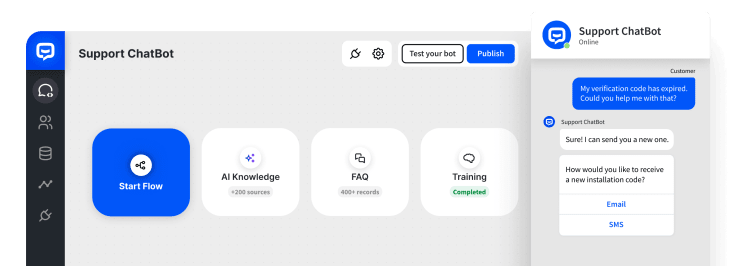
Simply put, customer service chatbots are AI-powered programs designed to chat with users, mimicking human conversation. These customer service chatbots use natural language processing to understand and respond to queries, handle routine tasks, and perform specific actions like booking appointments or processing orders. In many cases, a customer service chatbot can now be created in minutes with a no-code platform, making automation much more accessible. A chatbot for customer support can also help teams deliver faster answers across common service workflows.
The category has split into two tiers. Rule-based bots still exist and are fine for simple FAQ deflection, but the tools worth evaluating in 2026 are increasingly AI agents: chatbots built on large language models that read your help content directly, hold a real conversation instead of following a decision tree, handle multi-turn reasoning for complex inquiries before escalating, and hand off to a human the moment something falls outside their scope. That distinction — agent vs. scripted bot — is the single biggest factor separating this list from what it would have looked like two years ago.
Benefits of chatbots in customer service
Customer support chatbots offer a blend of efficiency, personalization, and data-driven insights. Here's how AI-powered chatbots make a difference:
- Always on duty: Chatbots don't sleep, providing 24/7 support to answer queries anytime.
- Quick replies: They cut down wait times by instantly responding to common questions and routine customer inquiries.
- Handling the crowd: With the ability to manage numerous chats simultaneously, a customer support chatbot excels in high-demand scenarios and supports customer support with ai across channels.
- Insightful data collection: They gather crucial customer data from chatbot interactions, which can reveal customer preferences and trends, while automated reporting tools provide insights into chatbot performance.
- Boosting human efficiency: Chatbots free up human agents to tackle more complex issues by taking over routine tasks and collecting customer feedback along the way.
- Customized interactions: Modern AI agents respond using your actual help content and past conversation history, not just static scripts, which makes tailored responses the default rather than an advanced feature, and teams can track key customer service metrics over time to keep improving automation quality.
9 best customer service chatbots
Let's explore the top 9 chatbots leading the charge in revolutionizing customer interactions.
1. ChatBot
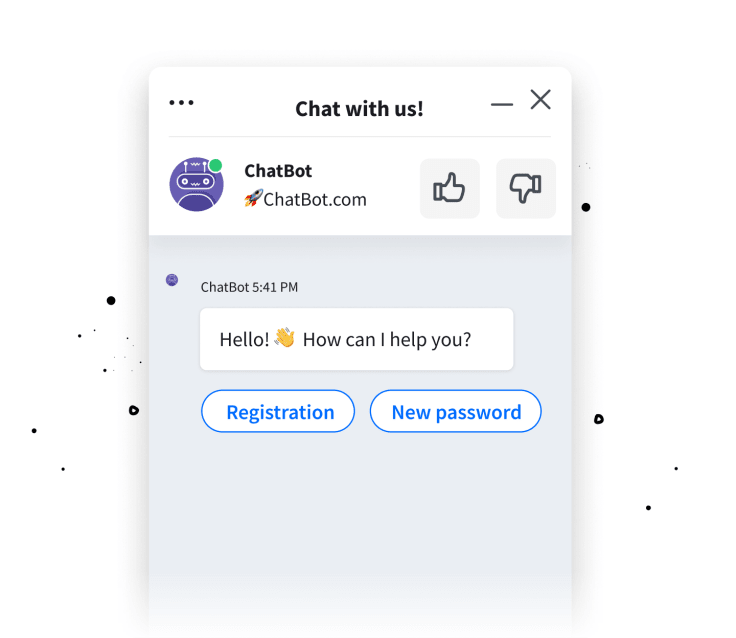
ChatBot is built around an AI Agent that answers from your own website, help center, and documents rather than a scripted flow — you set its tone and hard limits through custom instructions, and it stays inside them. It automates routine tasks, freeing up your support team to handle more complex issues, and offers 24/7 support to address customer queries promptly.
Beyond answering questions, ChatBot excels in lead generation and qualification, integrating with CRMs for a smoother sales process, and connects with live chat and helpdesk tools so agents get full context when a conversation is handed to them. It can also connect with existing customer service platforms like Zendesk, making it easier to chat with human support or run ai chat with human workflows when issues need human support.
Pros
- Content-trained AI Agent: scans your website, help center, and documents to give accurate, on-brand answers without you writing conversation flows by hand.
- Multiple data sources: can be trained on websites, help centers, or text documents, refreshed on a schedule you set.
- Integrations: connects with tools like LiveChat, HelpDesk, and Zapier.
- 24/7 customer service: always available to instantly answer common questions.
- Custom guardrails: instructions of up to 10,000 characters let you prohibit specific advice and name topics that always escalate to a person.
- Templates: offers templates for many industries and use cases.
- Smooth human handoff: full conversation history and customer context travel with the chat when it's transferred, with automated summaries so customers do not have to repeat themselves.
Cons
- Learning curve: setting up knowledge sources and instructions well takes some initial effort.
- Cost consideration: potentially higher investment for very small businesses compared to free-tier competitors.
Read more: All You Need to Know to Use Chatbots in Business. Complete Guide 2026
2. Zendesk
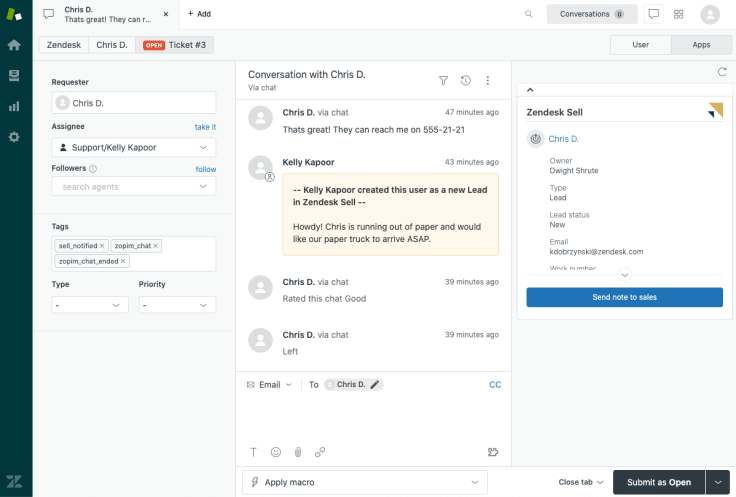
Zendesk remains a versatile customer service platform, with its omnichannel Agent Workspace combining communications from various channels into one interface for customer service automation across multiple channels and displaying customer context for more personalized support.
Zendesk's AI has changed shape since 2024: its AI Agents (built on its Ultimate.ai acquisition) now bill on an outcome-based model — roughly $1.50–$2 per automated resolution — on top of Suite seat pricing that starts around $55–$115/agent/month depending on tier, plus a separate Copilot add-on. That structure also makes it easier to run a chatbot on different channels, including web, email, chat voice and social, while tying AI spend more closely to resolved conversations rather than just deflection.
Pros
- Omnichannel agent workspace: centralizes customer interactions from various channels.
- Outcome-based AI pricing: you pay per resolved conversation rather than a flat seat tax for AI, which can align cost with value at moderate volume.
- Robust ticketing and help desk: enhances support capabilities with built-in voice calling.
Cons
- No free plan: entry-level Suite pricing starts around $55/agent/month, with Advanced AI billed separately on top.
- Costs stack quickly: Copilot, workforce management, and per-resolution AI fees are each separate line items — model your real ticket volume before committing.
- Steep learning curve: advanced features may require significant training.
3. HelpCrunch
HelpCrunch's platform now combines a classic flow-based chatbot editor with newer AI Agents trained on your content, which HelpCrunch says can resolve up to 80% of routine customer questions on the Pro plan and above.
The flow editor is still there for teams that want predefined triggers and responses, and it integrates with a knowledge base to pull relevant articles automatically. Agent tagging and routing direct conversations to the right person when a handoff is needed.
Pros
- AI Agents: trained on your own content, working alongside (not just replacing) the classic flow editor.
- User-friendly chatbot editor: enables easy creation of custom chat flows for teams that prefer scripted paths.
- Effective query routing: tags and assigns conversations for better resolution.
- Information collection: gathers essential customer details for personalized service.
Cons
- AI conversation caps: the AI Agent tier has a monthly conversation quota on lower plans; heavier volume requires paid add-ons.
- Requires the flow builder for anything outside FAQs: the rule-based bot still relies on predefined triggers, which limits flexibility for edge cases.4. HubSpot
![]() 4. HubSpot
4. HubSpot
HubSpot still offers its free, no-code rule-based chatbot builder (Chatflows), but the bigger story in 2026 is Breeze Customer Agent — HubSpot's AI-powered support agent that resolves inquiries using your CRM and help content, available on Professional and Enterprise Service Hub tiers and billed through HubSpot Credits on top of seat pricing.
HubSpot's chatbot personalizes responses using CRM data automatically, which is its clearest advantage for teams already living in the HubSpot ecosystem. That CRM context helps it deliver crm powered customer support by analyzing user data and tailoring replies instead of falling back on generic answers, which also makes it a stronger fit for powered customer support automation.
Pros
- Free rule-based builder: Chatflows remains free and genuinely no-code for simple FAQ or lead-capture bots.
- CRM-grounded AI: Breeze Customer Agent personalizes responses using live CRM context, not just static content.
- Customizable: option to remove HubSpot branding on paid plans.
Cons
- AI agent isn't free: Breeze Customer Agent requires a Professional or Enterprise Service Hub seat plus usage-based Credits.
- Limited communication channels for the free tier: broader channel support and automation sit behind paid plans.
- Pricing has grown more complex: seat cost, tier, and Credit usage all factor into the real monthly bill — model it before committing.
5. Freshchat
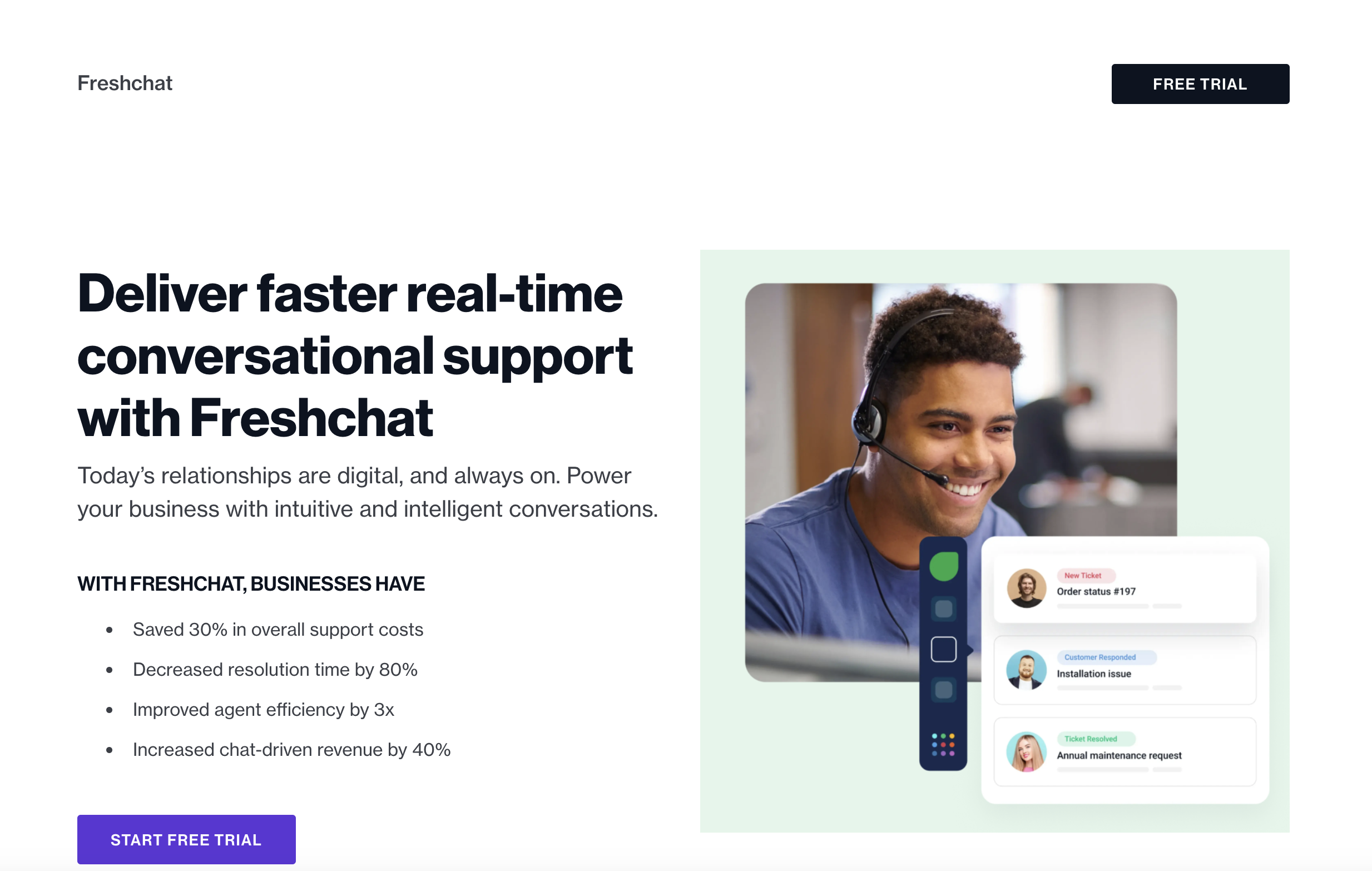
Freshchat, Freshworks' messaging and live-chat product, still runs on Freddy AI and is now commonly bundled with Freshdesk under the Freshdesk Omni name for teams that want ticketing and live chat in one product. It integrates web, social messaging, and mobile apps into a shared inbox, which suits teams running support with ai automation across several touchpoints at once and want trained ai support across customer channels.
Pros
- Freddy AI bots: handle FAQs and routine account questions, trainable on multiple languages.
- Native Freshworks integration: shares context with Freshdesk and Freshsales without third-party middleware.
- Brand customization: adjusts chatbot appearance to match your brand.
Cons
- AI usage is metered: Freddy AI bot conversations are billed separately from base seats, so heavier usage needs budgeting.
- Naming can be confusing: Freshchat, Freshdesk, and Freshdesk Omni solve overlapping but distinct problems — worth clarifying which one you actually need before buying.
6. Intercom (Fin)
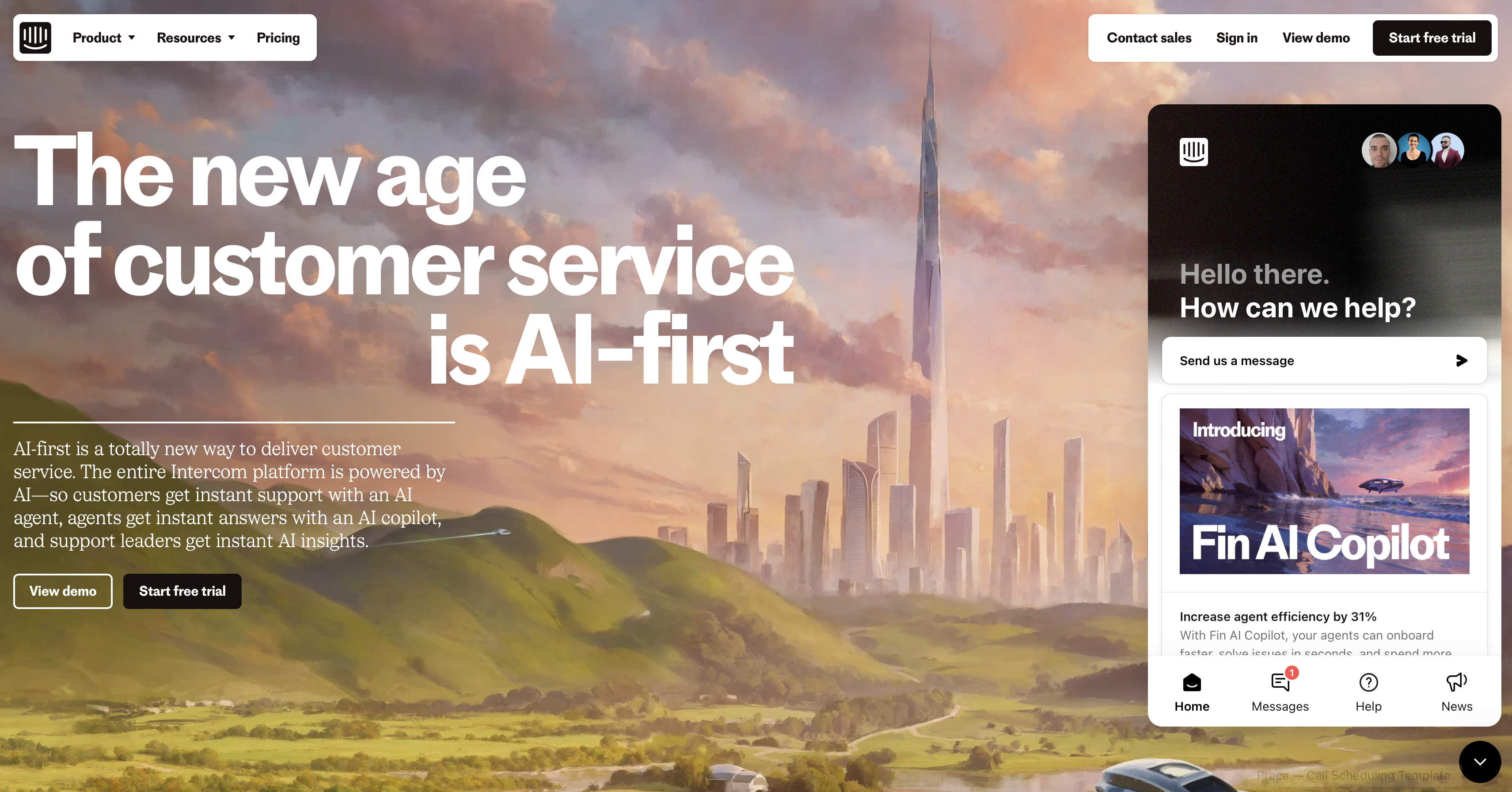 Intercom's AI Agent, Fin, is one of the most widely deployed customer service AI agents on the market, priced at $0.99 per resolved outcome on top of Intercom seat pricing. It's a strong option if you want a mature, high-volume AI agent, especially for high volume support teams needing advanced ai automation, and are comfortable with usage-based pricing that scales with how much it actually resolves. It can also handle more complex customer queries before routing edge cases to people, which makes it a practical fit for support teams needing advanced workflows and teams needing advanced ai capabilities.
Worth knowing before you commit: in June 2026, Salesforce signed a definitive agreement to acquire Fin (the company, formerly branded Intercom) for roughly $3.6 billion. The deal hadn't closed as of this writing, and pricing hasn't changed as a result, but it's worth watching for plan or product shifts if you're signing a multi-year contract.
Pros
- Mature AI agent: one of the most battle-tested AI support agents, with a large body of independent resolution-rate data.
- Outcome-based pricing: pay per resolution rather than a flat AI tax, which rewards effective automation.
- Strong omnichannel live chat foundation underneath the AI layer.
Cons
- Per-resolution costs compound at scale: high ticket volumes can produce a large, variable AI bill — model it against your real numbers first.
- Pending acquisition: the Salesforce deal adds some near-term uncertainty for long-term contract planning.
7. Chatfuel

Chatfuel has evolved well past its Facebook Messenger bot-builder roots into what it calls an "AI Business Assistant" — an AI agent that can autonomously respond across WhatsApp, Instagram, and Facebook, handle bookings, and escalate to a human when needed, on top of its original no-code flow builder.
Pros
- AI Business Assistant: goes beyond scripted replies to handle multi-step tasks like bookings across Meta channels.
- Official Meta and WhatsApp Business Solution Provider status, which smooths WhatsApp deployment.
- Free tier (Chatfuel Light) covers basic automation across Instagram, Facebook, and WhatsApp.
Cons
- AI features are a separate paid tier: the AI agent layer requires the paid plan on top of the free flow builder.
- Best suited to Meta-centric businesses: less relevant if your support volume lives primarily on your own website or email.
8. Bitrix24
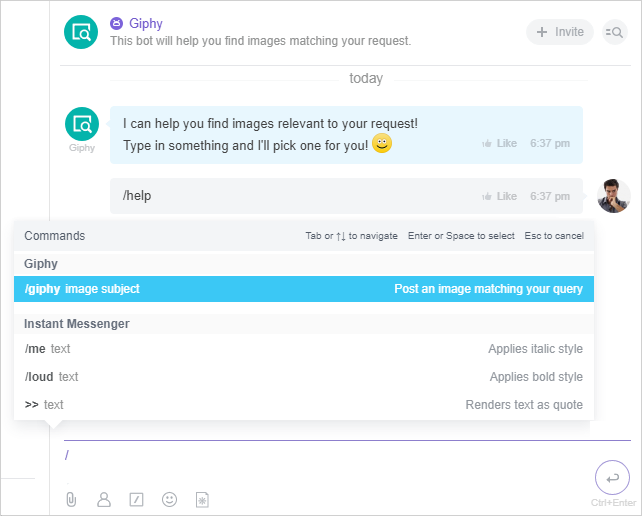 Bitrix24 remains a strong option for teams that want a chatbot bundled inside a broader free CRM and collaboration suite. Its free plan supports unlimited users and includes a no-code chatbot builder alongside Bitrix24's CoPilot AI assistant for chat and CRM tasks.
Pros
- Genuinely free plan: unlimited users on the free tier, unusual among competitors on this list.
- Bundled with CRM and collaboration tools: useful if you want chat, tasks, and CRM in one place rather than stitching tools together.
- CoPilot AI assistant: available in chat for summarizing and managing records, on top of the chatbot builder.
Cons
- Complex interface: the all-in-one scope means a steeper learning curve than a dedicated chatbot tool.
- Support is more limited on lower tiers: live chat and email only unless you're on a higher plan.
9. Flow XO
 Flow XO offers a free tier for small marketing teams or support desks, with paid plans starting around $19–25/month, making it a practical fit for businesses needing affordable ai and smaller teams needing affordable ai support without taking on high software costs. It has meaningfully closed a long-standing gap: Flow XO now includes ChatGPT-based AI features — intent detection, entity recognition, sentiment analysis, and knowledge bases — addressing what used to be its biggest weakness, and sentiment analysis also helps enable more proactive support flows.
Pros
- Free plan available: workable for small-scale operations, with paid tiers a low-cost step up.
- ChatGPT-based AI: intent detection and knowledge-base answers are now built in, not a missing feature.
- Broad integrations: 100+ direct integrations plus Zapier/Make for everything else.
Cons
- No visual flow builder: flows are built without the drag-and-drop canvas some competitors offer, which can slow down complex setups.
- AI usage is credit-limited: free and lower tiers cap monthly AI credits, so heavier AI use requires upgrading.
Real-life examples of customer service chatbots
Major brands across sectors use chatbots to enhance user experience, streamline processes, and provide personalized support. Here's how some well-known companies are integrating chatbots into their customer service strategies, with examples that reflect how chatbots for customer service are used in real buying and support journeys:
Domino's Pizza
 Domino's employs a chatbot on its website and app, simplifying meal ordering. Customers can choose toppings and place orders through natural language conversation, making the process efficient and user-friendly. In ecommerce, customer service chatbots including retail and food-ordering assistants are also commonly used to automate order tracking and returns alongside recommendations and ordering.
H&M
 H&M's virtual shopping assistant interacts with customers for fashion advice, suggesting outfits and clothing items based on user preferences, personalizing the shopping experience. Retail chatbots can also suggest products based on previous purchases or known preferences.
Bank of America
 Erica, Bank of America's virtual assistant, aids customers with account inquiries, balance checks, and transaction history. Since its 2018 launch, 42 million clients have used Erica, with cumulative interactions passing 3.2 billion as of 2026 — one of the most heavily used bank chatbots in the world.
Sephora
 Sephora's chatbot doubles as a beauty advisor, providing makeup and skincare recommendations, application tips, and tutorials, enhancing the online shopping journey with expert advice.
Scaling your business with customer service bots
Incorporating AI customer service chatbots into your business strategy is smart. Gartner's forecast — 80% of common customer service issues resolved autonomously by 2029, with a 30% cut in operational costs — gives a sense of where the ceiling is heading, even if most teams are still well short of it today. For volume support teams needing practical ways to reduce workload, this often means service automation at scale, and some businesses using chatbot workflows can automate 125,000 chats per year while keeping agents focused on higher-value work.
Here are key ways to leverage these virtual assistants for scaling your business:
- Personalize interactions: Customize chatbot conversations to make each customer feel unique and valued.
- Multichannel approach: Deploy chatbots across platforms like websites, social media, and messaging apps for broader reach, as external support organizations frequently use them to maintain always-on coverage.
- Interactive FAQs: Equip bots with answers to frequently asked questions for efficient and direct customer support.
- Rich text and content: Use engaging text formats and visual elements to make interactions more lively and appealing.
- Streamline routine tasks: Automate common inquiries and basic tasks so human agents can focus on complex issues, and streamline internal employee inquiries that would otherwise add to manual support load.
- Seamless human handoffs: Ensure chatbots can smoothly transition complex cases to human agents, with context intact, for personalized attention.
- Continuous improvement: Regularly analyze and update your chatbot's content sources and instructions based on customer interactions and feedback, since support organizations frequently deploy them across customer service and HR workflows as needs evolve.
Read more: 9 Interesting Chatbot Ideas for Businesses
Conclusion
Businesses are transforming their customer interactions with service chatbots that offer efficient, personalized, and increasingly autonomous support. Among these, ChatBot stands out as our top pick for 2026 — you can try the free 14-day trial here.
Its AI Agent gives quick, accurate answers grounded in your own content, can set up quickly in just a few clicks for straightforward deployments, and keeps sensitive or complex requests moving to a human with full context attached. That combination positions ChatBot as a strong choice for businesses looking to scale customer service without scaling headcount, while showing that a chatbot replace human customer conversations only in limited routine cases, not replace human customer service overall, and still works best alongside human customer service agents for complex or emotional issues.
Conclusion
Businesses are transforming their customer interactions with service chatbots which offer efficient, personalized, and innovative experiences. Among these, ChatBot stands out as our top pick for 2024. You can try the free 14-day trial here.
Its ability to provide quick and accurate AI-generated answers and a no-coding-required setup makes it an invaluable asset for any business.
ChatBot ensures faster 24/7 support, operates independently of third-party providers like OpenAI or Google Bard, and strongly emphasizes data security, with all data processed and hosted within its own platform.
This combination of features positions ChatBot as a leading choice for businesses looking to enhance their customer service experience while maintaining data integrity and operational efficiency.